Description
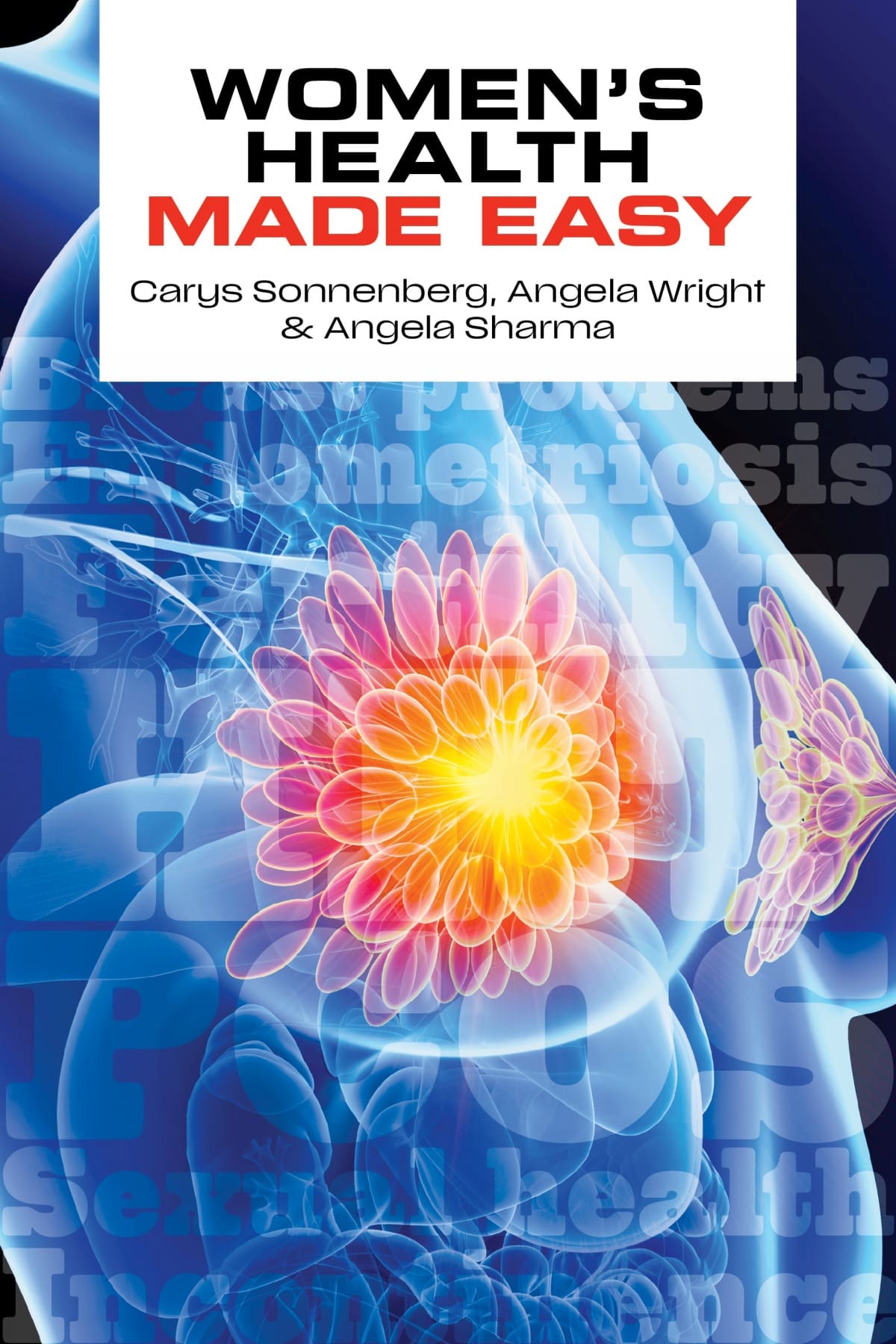
Women’s Health Made Easy
Women’s Health Made Easy provides a clear and comprehensive overview of key women’s health topics, helping GPs and primary care teams deliver high-quality, evidence-based, patient-centred care.
The book offers practical guidance on:
- Menstrual disorders
- Contraception and fertility
- Sexual health
- Breast concerns
- Menopause and HRT
- Genitourinary issues
- Vulval dermatology
- Female cancer screening
It combines essential clinical knowledge with effective communication strategies to support practitioners in taking thorough histories, conducting sensitive consultations, and addressing complex or intimate issues with confidence. Safeguarding, perinatal mental health, and the relationship between hormonal and psychological wellbeing are also included. Topics are supported by the use of real-world case histories, to relate theory to practice.
Women’s Health Made Easy is an essential reference for all primary care health professionals.
Detailed contents; Preface; Acknowledgements; About the authors; Abbreviations
Chapter 1 Female anatomy and physiology
1.1 Female anatomy
1.2 Hormones
1.3 Folliculogenesis
1.4 The menstrual cycle
1.5 Puberty
1.6 Menopause
1.7 Further reading
Chapter 2 Menstrual disorders
2.1 Introduction
2.2 Normal menstruation
2.3 Heavy menstrual bleeding and other menstrual disorders
2.4 Non-menstrual bleeding
2.5 How to delay a period
2.6 Amenorrhoea
2.7 Endometriosis and adenomyosis
2.8 Fibroids
2.9 Polycystic ovary syndrome
2.10 Conclusion
2.11 Further reading
Chapter 3 Contraception
3.1 Introduction
3.2 The contraceptive consultation
3.3 Progestogen choice in contraception
3.4 Combined hormonal contraception
3.5 Progestogen-only pills
3.6 Injectable contraception
3.7 Contraceptive implant
3.8 Intrauterine contraception
3.9 Barrier methods
3.10 Fertility awareness
3.11 Male and female sterilisation
3.12 Emergency contraception
3.13 Further reading
Chapter 4 Sexual health
4.1 Introduction
4.2 How to talk with patients about sex
4.3 Supporting sexual wellbeing in our patients
4.4 What is sexual health?
4.5 Barriers to care and intersectionality
4.6 Providing trauma-informed care
4.7 Vaginal discharge
4.8 Vulvovaginal candidiasis
4.9 Bacterial vaginosis
4.10 Sexually transmitted infections
4.11 Chlamydia
4.12 Gonorrhoea
4.13 Syphilis
4.14 Herpes simplex virus
4.15 Anogenital warts
4.16 Human immunodeficiency virus
4.17 Trichomoniasis
4.18 Mpox
4.19 Urogenital commensals
4.20 Further reading
Chapter 5 Pregnancy and fertility
5.1 Introduction
5.2 Antenatal checks
5.3 Birth to the six weeks postnatal appointment
5.4 Postnatal check
5.5 Miscarriage
5.6 Nausea and vomiting in pregnancy
5.7 Hypertension in pregnancy and postnatal hypertension
5.8 Gestational diabetes
5.9 Anaemia in pregnancy
5.10 Perinatal mental health
5.11 Abortion care
5.12 Impact on sexual function
5.13 How to take a fertility history
5.14 Infertility
5.15 Conclusion
5.16 Further reading
Chapter 6 Menopause
6.1 Menopause definitions
6.2 Symptoms of perimenopause and menopause
6.3 Diagnosis of perimenopause and menopause
6.4 Patient assessment
6.5 Future health discussion
6.6 Management options for perimenopause and menopause
6.7 Genitourinary syndrome of the menopause
6.8 Premature ovarian insufficiency
6.9 Induced menopause
6.10 Surgical menopause
6.11 Menopause after cancer
6.12 Resources
6.13 Further reading
Chapter 7 Hormone replacement therapy
7.1 HRT summary
7.2 Types of oestrogen and progestogen used in HRT
7.3 Bioidentical HRT
7.4 Systemic HRT
7.5 Hormonal contraception and perimenopause
7.6 Tibolone
7.7 Initiating HRT
7.8 Injectable weight-loss drugs, contraception and HRT
7.9 HRT products and doses
7.10 Testing oestrogen levels
7.11 Contraindications to HRT
7.12 Managing patients taking HRT
7.13 Stopping HRT
7.14 Side-effects of HRT
7.15 Unscheduled bleeding on HRT
7.16 Benefits and risks of taking HRT
7.17 Prescribing HRT in certain groups
7.18 Sexual desire and testosterone
7.19 Referral to a menopause specialist
7.20 Resources for clinicians
7.21 Further reading
Chapter 8 Female mental health
8.1 Introduction to the premenstrual disorders
8.2 Perinatal mental health
8.3 Hormonal contraception and mood disorders
8.4 Neurodiversity in women and girls
8.4.1 What is neurodiversity and who is affected?
8.5 Eating disorders and body dysmorphic disorder
8.6 Further reading
Chapter 9 Genitourinary issues
9.1 Pelvic organ prolapse
9.2 Urinary incontinence
9.3 Faecal incontinence
9.4 Recurrent UTI
9.5 Bladder pain syndrome / interstitial cystitis
9.6 Sexual pain / penetration disorders
9.7 Persistent genital arousal disorder
9.8 Further reading
Chapter 10 Vulval dermatology
10.1 Introduction
10.2 Prepubertal girls
10.3 Girls and women of reproductive age
10.4 Postmenopausal women
10.5 Practical tips to help manage vulval dermatoses
10.6 General care of the vulval skin and self-examination
10.7 Red flags and when to refer
10.8 Further reading
Chapter 11 Female cancer and screening
11.1 Introduction
11.2 Breast cancer and the NHS breast screening programme
11.3 Endometrial cancer
11.4 Cervical cancer and the NHS cervical cancer screening programme
11.5 Ovarian cancer
11.6 Vulval cancer
11.7 Vaginal cancer
11.8 Support after cancer
11.9 Conclusion
11.10 Further reading
Chapter 12 The breast
12.1 The breast
12.2 Breast symptoms
12.3 Benign breast conditions
12.4 Breast cancer
12.5 Breast pain
12.6 Nipple discharge
12.7 Nipple changes
12.8 Breastfeeding
12.9 Breast imaging
12.10 Further reading
Chapter 13 Legal and safeguarding
13.1 Consent
13.2 Understanding our safeguarding responsibilities
13.3 Sexual assault
13.4 Domestic violence
13.5 Non-fatal strangulation
13.6 Further reading
Index
No resources currently available for this title.